Home education gives families the freedom to learn in ways that truly suit their children. One of the most powerful, and often underestimated, ways children learn is through role play. From running a pretend café to caring for sick teddy bears, role play transforms learning into an immersive experience where children explore, experiment, and make sense of the world around them. In this post, we’ll explore why role play is such a valuable tool for home education and how you can easily incorporate it into everyday learning.
Role Play in Home Education: Why It Works So Well
Children learn best through doing, not just listening or watching.
Role play encourages:
- problem solving
- communication skills
- emotional understanding
- creativity and imagination
- real-life skill development
When children step into a role, they aren’t just pretending — they are practising life skills in a safe and playful way.
Role Play Covers Multiple Subjects at Once
One of the biggest benefits for home educators is that role play naturally combines multiple areas of learning.
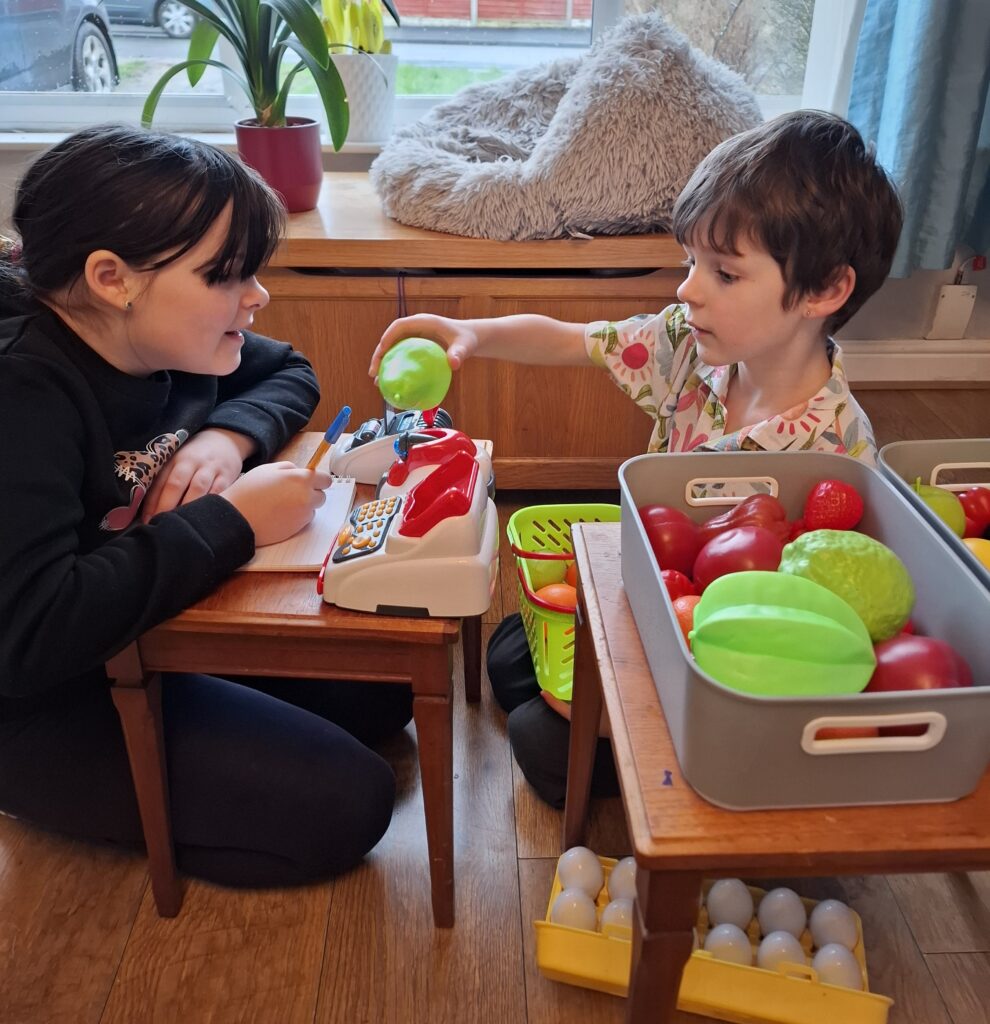
Shop Role Play
- Maths: counting money, pricing items, giving change
- Literacy: writing signs, labels, shopping lists
- Social skills: conversation and turn taking
Vet Surgery
- Science: animal care and habitats
- PSHE: empathy and responsibility
- Literacy: writing patient notes
Travel Agency
- Geography: countries and cultures
- Maths: budgeting and planning trips
- Literacy: brochures and booking forms
Role play creates a natural, real-world context that makes learning meaningful and memorable.
Supporting Emotional & Social Development
Role play allows children to explore emotions and experiences in a safe environment.
They can:
- act out real-life situations
- practise social interactions
- process new experiences
- build confidence in communication
For some children, especially those who feel anxious in structured environments, role play offers a gentle way to explore feelings and social situations.
Easy Ways to Add Role Play to Your Home Education
You don’t need expensive equipment or a dedicated playroom to get started.
Start with everyday items
- cardboard boxes → shop counters
- old clothes → costumes
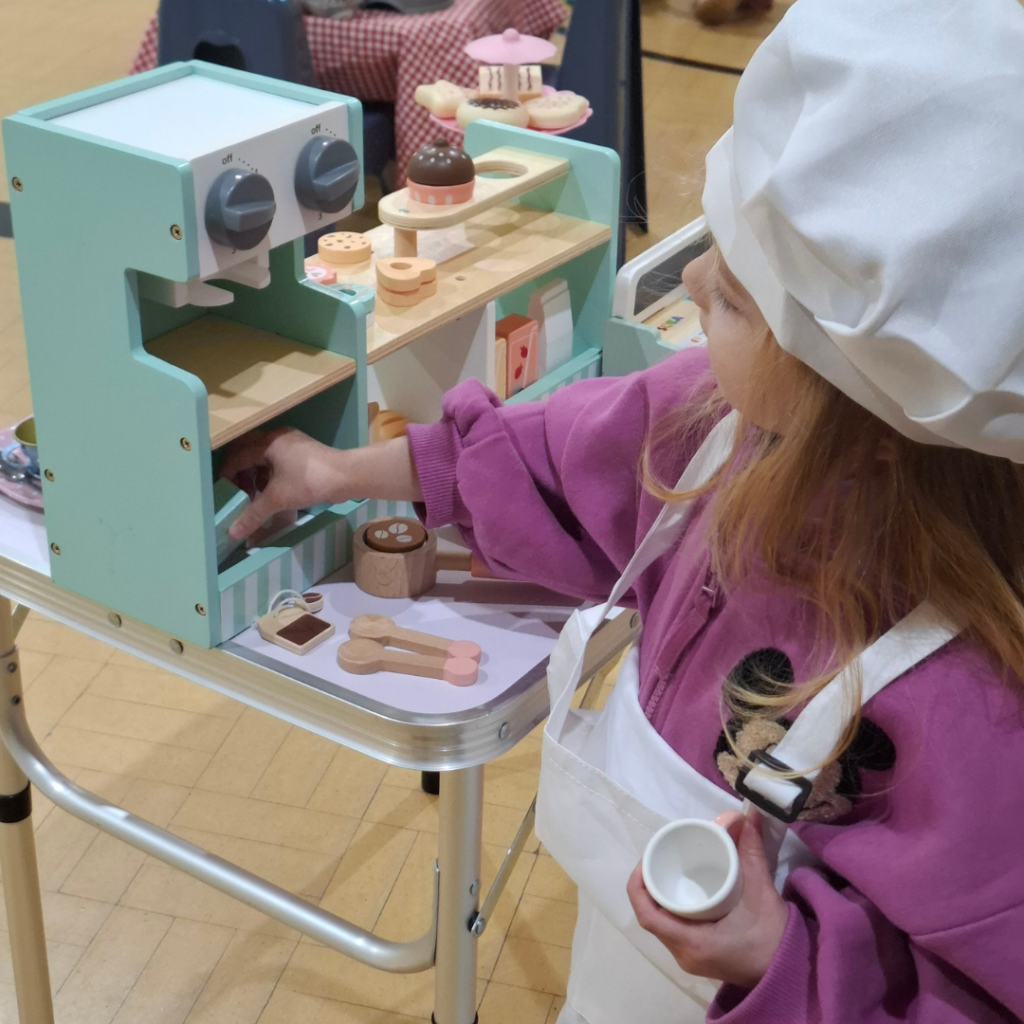
- kitchen utensils → café props
- notebooks → appointment books
Rotate themes to keep interest high
- Post Office
- Café
- Doctor’s Surgery
- Construction Site
- Supermarket
- Camping Adventure
Let your child lead
Follow their ideas and interests, this builds confidence and deeper engagement.
Free Role Play Ideas for Home Educating Families
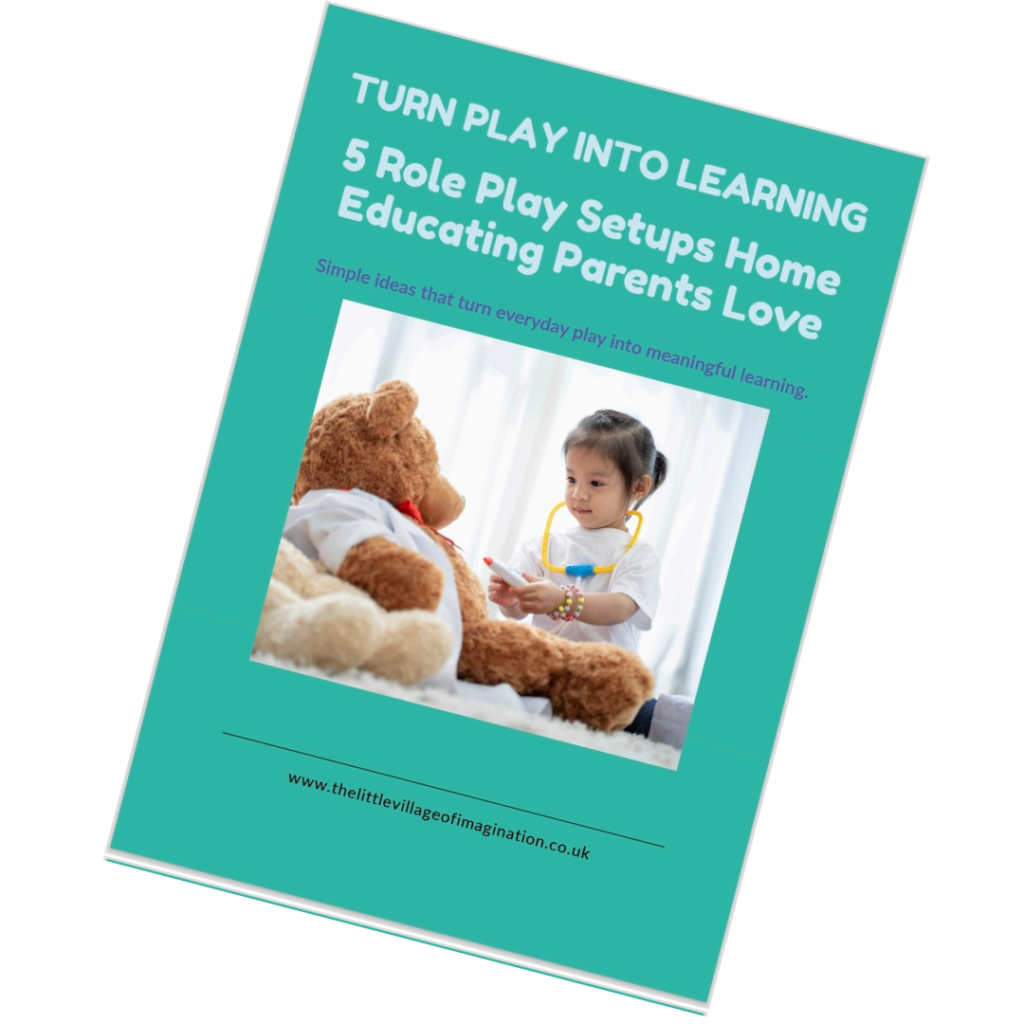
If you’re looking for simple ways to introduce role play into your home education routine, my free guide can help.
Turn Play Into Learning: 5 Role Play Setups Home Educating Parents Love includes five easy role play themes designed to support learning across literacy, maths, creativity and communication.
Download your free guide here:
Extending Learning Through Role Play
To deepen learning, try:
- creating signs and menus
- writing tickets or forms
- counting money or stock
- researching real jobs online
- reading books related to the theme
This transforms play into a rich, learning experience.
Role Play Encourages Independent Learning
Role play encourages children to:
- think creatively
- solve problems independently
- explore ideas at their own pace
- develop self-confidence
These are essential lifelong skills that go far beyond academic learning.
Final Thoughts
Role play isn’t “just play”, it is meaningful, hands-on learning that supports academic, emotional, and social development.
For home-educating families, it offers a flexible, engaging, and joyful way to explore the world together.
Continue the Play-Based Learning Journey
If you’d like more play-based learning ideas, encouragement, and inspiration, you’re very welcome to join my free Facebook community for home educating families.
Inside Play Based Home Education UK, parents share ideas, ask questions, and support each other as they explore learning through play with their children.
If you’re looking for more structured role play themes and printable resources, you might also enjoy The Play Based Learning Club.
Each month inside the club you’ll find themed role play setups, activity ideas, and printable resources designed to help home educating families support learning across subjects, all through play.