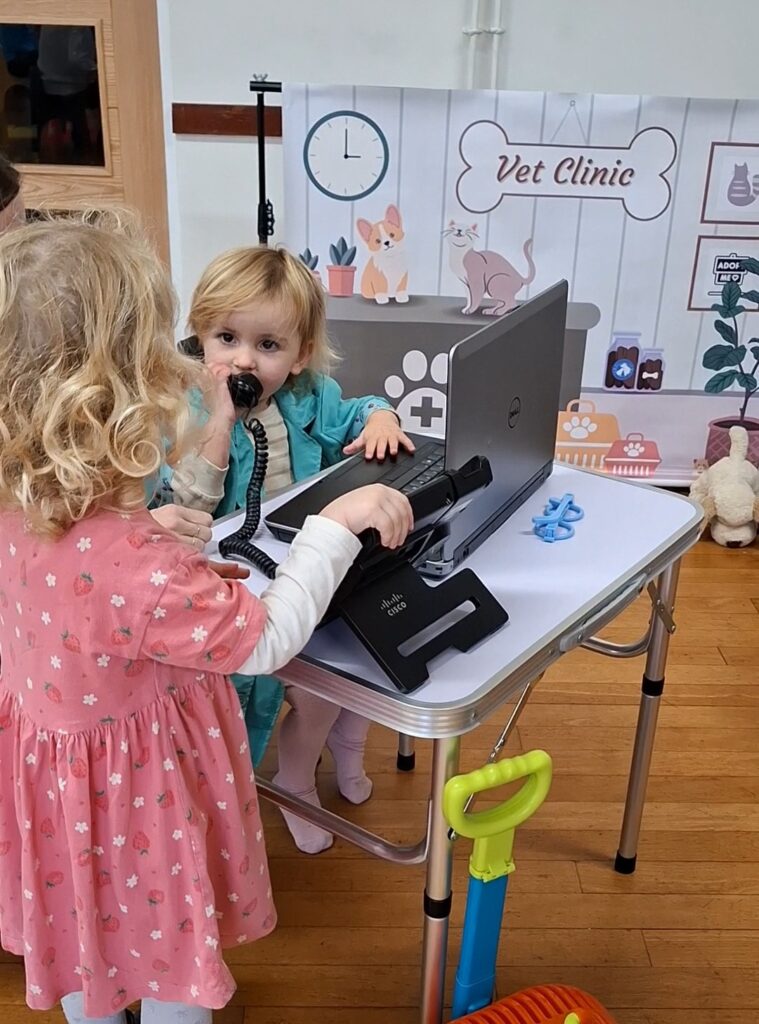
Supporting children’s mental health through EYFS role play is a key part of Early Years practice, helping children explore emotions, build confidence, and develop emotional understanding through play. For nurseries and schools in Walsall, Sutton Coldfield, Lichfield and the surrounding areas, this is best supported through play-based, child-led learning in line with the Early Years Foundation Stage (EYFS).
Two powerful tools that support children’s emotional development are stories and role play. Used together, they help children explore feelings, practise social situations, and develop emotional understanding in a safe and familiar way.
Why Role Play Supports Children’s Mental Health in EYFS
Young children do not always have the language to explain how they feel. In Early Years settings, emotions are often expressed through behaviour and play.
Role play supports children’s mental health by helping them to:
- Explore emotions safely
- Practise social interactions and turn-taking
- Develop emotional vocabulary
- Build empathy and understanding
- Strengthen confidence and self-regulation
For nurseries and Reception classes, role play provides a natural and effective way to support Personal, Social and Emotional Development (PSED).
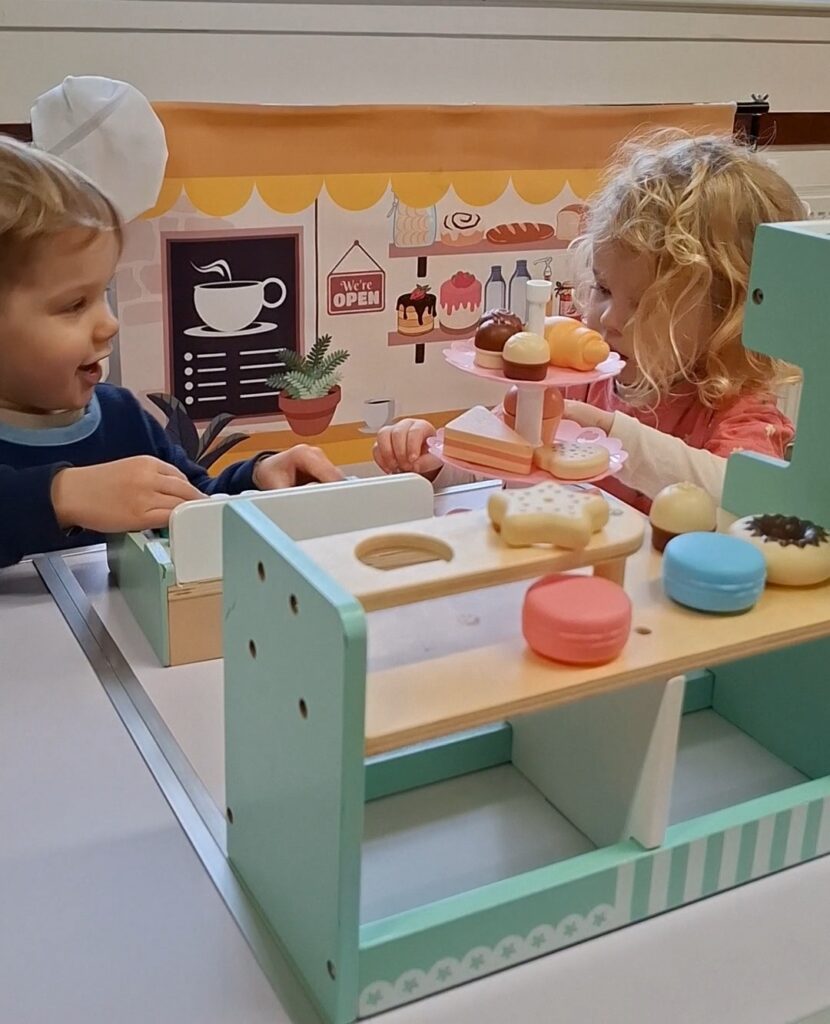
How Stories and Role Play Work Together in Early Years Settings
Stories help children recognise emotions, understand that feelings are normal, and see how characters cope with challenges. When followed by role play, children can revisit these ideas through imaginative play.
In EYFS practice, reading a story and then offering a related role play opportunity supports:
- PSED
- Communication and Language
- Emotional wellbeing and confidence
This approach works particularly well in nurseries, Reception classes, and early years provisions.
Simple Role Play Ideas That Support Emotional Wellbeing
Everyday role play scenarios commonly used in Early Years settings provide valuable opportunities for emotional development:
- Home Corner – exploring family routines, security, and change
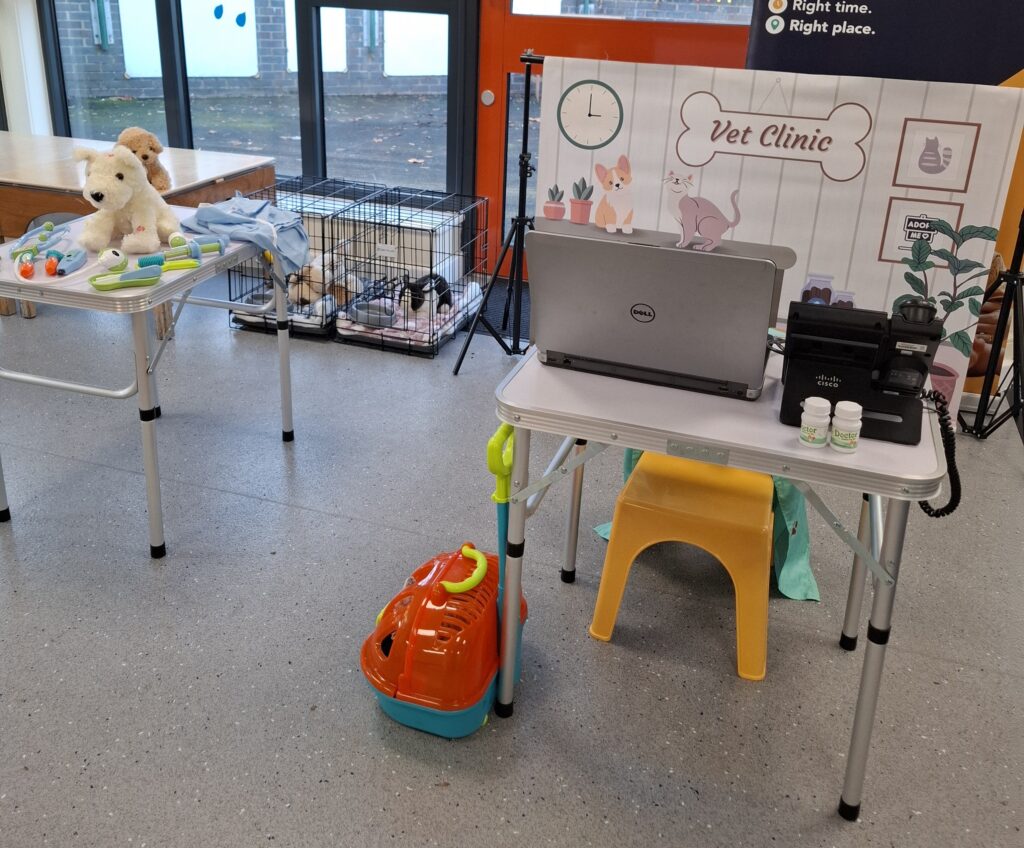
- Doctor or Vet – supporting empathy, reassurance, and worry
- Shop or Café – practising communication, confidence, and turn-taking
- Construction Play – managing frustration, perseverance, and problem-solving
- Emergency Services – exploring feelings of safety and trust
These role play ideas support EYFS outcomes while allowing practitioners to follow children’s interests and extend learning through sensitive questioning.
Age-Appropriate Role Play in Nursery and Reception
Nursery (3–4 years):
Open-ended, child-led play using simple language, repetition, and modelling emotional vocabulary.
Reception (4–5 years):
Extended role play through problem-solving, open-ended questions, and links to real-life experiences.
A Gentle Reminder for Early Years Practitioners
There is no “right” or “wrong” way for children to engage in role play. Watching, repeating scenarios, or expressing emotions quietly are all valid and important parts of emotional development.
If you’d like to use these ideas in your own setting, you can download our free EYFS guide below.
Free EYFS Resource for Nurseries & Schools in Walsall and Sutton Coldfield
To support nurseries, schools, and early years settings in Walsall, Sutton Coldfield, Lichfield and nearby areas, I’ve created a free EYFS-aligned guide:
Supporting Children’s Mental Health Through Role Play & Stories
The guide includes:
- Practical role play scenarios for Nursery and Reception
- Discussion prompts to support emotional development
- Guidance on using stories and role play together
- Age-appropriate EYFS ideas
About The Little Village of Imagination
The Little Village of Imagination provides EYFS-aligned, play-based role play experiences for nurseries, schools, and community settings across Walsall, Sutton Coldfield, Lichfield and surrounding areas.
Sessions support:
- Emotional wellbeing
- Communication and language
- Confidence and imagination